

Most pedal-powered party bikes are open-air, low-speed vehicles, and the Irish seat belt regulations were written for motor vehicles. So the short answer is that the car seat belt rules do not map neatly onto a party bike, and the safety of your ride rests on other things: a sober, trained driver, a roadworthy bike, slow speeds, and clear rules for riders. This guide explains what the law actually covers, what to look for in place of a belt, and what to ask any operator before you book a group ride in Galway.
TL;DR
- Ireland’s compulsory seat belt regulations apply to motor vehicles in defined categories, described as mechanically propelled with at least four wheels and a top design speed above 25 km/h.
- For cars, the penalty for an unbelted passenger is 3 penalty points and a €120 fine, but that is a car rule, not a party bike rule.
- On a party bike, safety comes from a sober driver, a well-maintained bike, no alcohol while moving, and riders who follow instructions.
- Before booking, ask the operator how riders are secured or seated, who drives, what insurance is held and how the bike is checked.
- Check the facts for your own date and group size directly with the operator, since vehicles and set-ups differ.
Table of Contents
- What the Irish seat belt law covers
- Why a party bike does not rely on seat belts
- What to ask an operator before you book
- Rules riders should follow on the day
- Different groups, different concerns
- A note on children and young riders
- Where to look if you are unsure
- Book a group ride in Galway
- FAQ
- Sources
What the Irish seat belt law covers
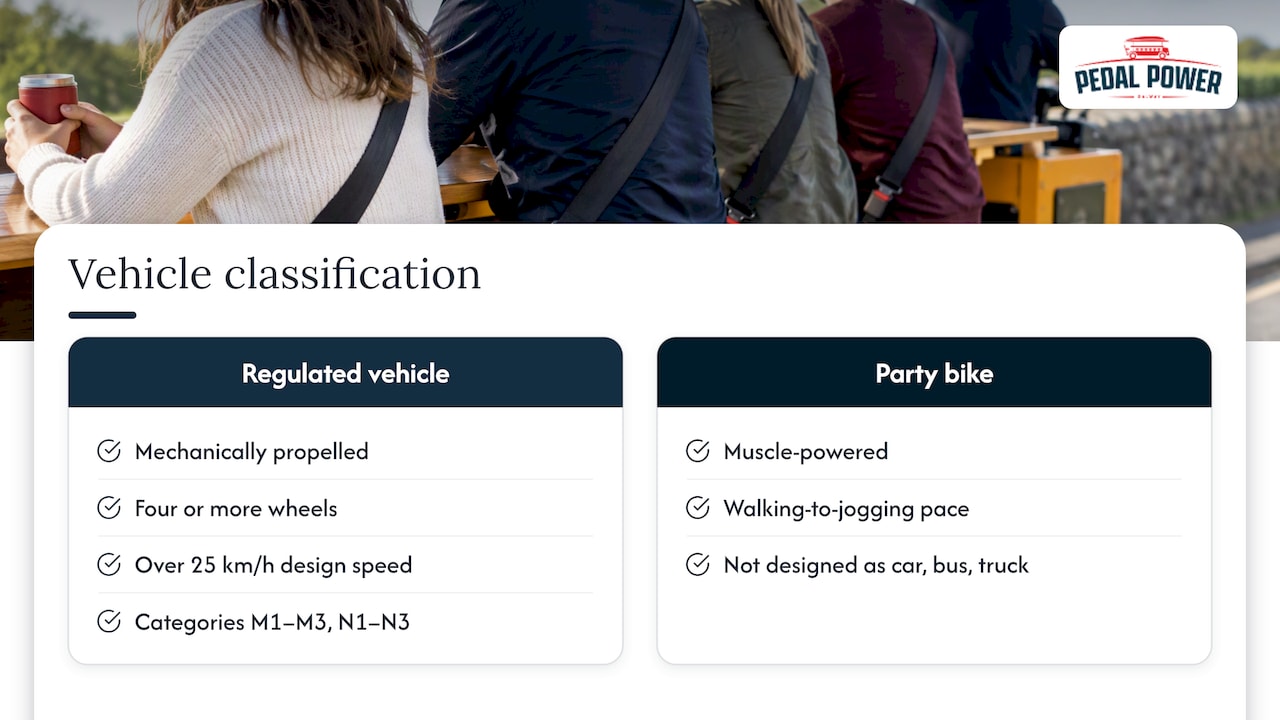
The main rule is S.I. No. 240/2006. According to the Irish Statute Book text of the regulations, they apply in public places to vehicles in categories M1, M2, M3, N1, N2 and N3. Those are the standard categories for passenger cars, buses and coaches, and goods vehicles. The same text defines a vehicle for this purpose as mechanically propelled, with at least four wheels and a maximum design speed over 25 kilometres per hour.
That definition is the key to the question. A party bike is moved by the muscle power of its riders, and it travels at walking-to-jogging pace in city traffic. It is not designed as a car, bus or truck, and it does not sit comfortably in the categories the regulation lists. Whether a particular vehicle with an assist motor or other special features is treated differently is a legal question for the operator and the Road Safety Authority (RSA), not something a rider should guess at.
This is general information, not legal advice. If you run a business or organize events with a vehicle of this kind, ask the RSA or a solicitor how the rules apply to your exact vehicle.
What the rule says for ordinary cars
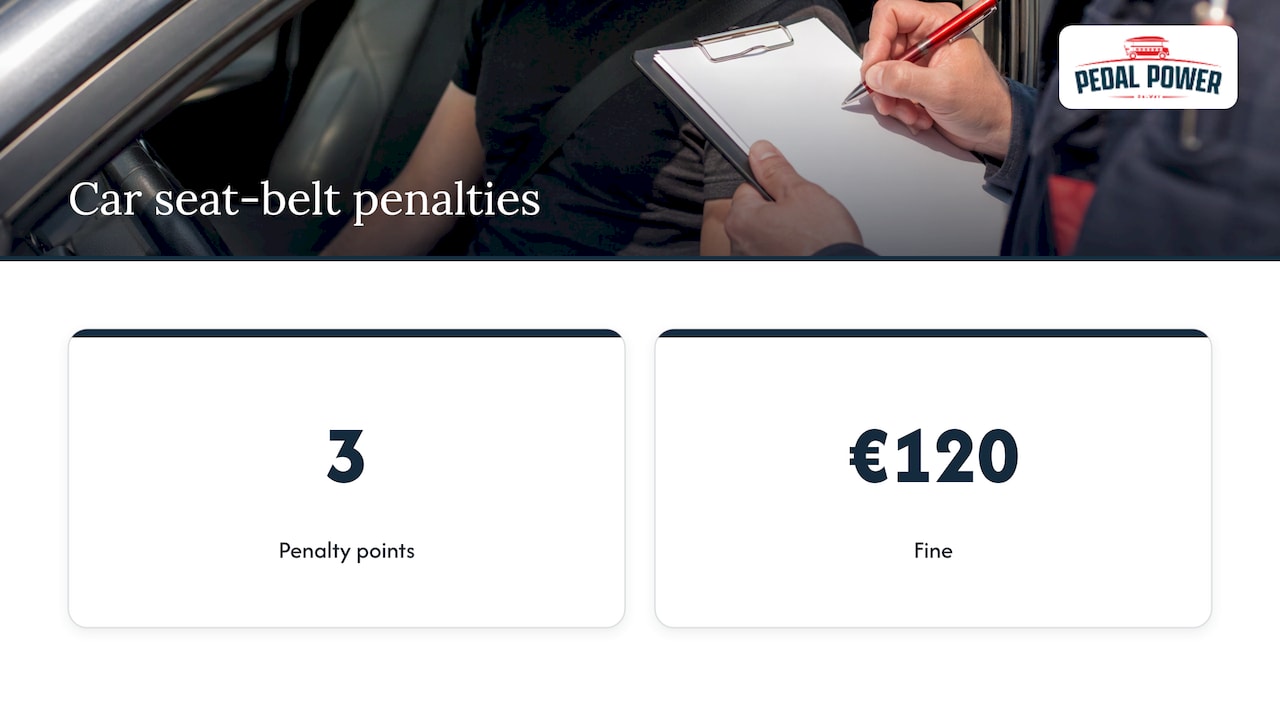
For cars, the rule is simple. Citizens Information explains that if seat belts are fitted, they must be worn by drivers and passengers, and that the driver is responsible for passengers under 17 being suitably restrained. The RSA’s guide says everyone in a car must wear a seat belt where one is fitted, and that not wearing one carries 3 penalty points and a €120 fine.
That penalty is the one people usually have in mind when they search this topic. It is worth knowing, but it belongs to the car and coach world. Do not assume it transfers to a pedal-powered bike, and do not assume that a missing belt means something is wrong with the bike.
Why a party bike does not rely on seat belts
A seat belt is designed for a vehicle that can reach speeds where a crash throws occupants forward with great force. A party bike is a different kind of machine. It is open-air, you sit in a seat facing outward or inward, and the whole experience is built around being social, hearing the music and seeing the city. Riders pedal, chat and wave. On many designs, some seats are fixed with no pedals so that guests who cannot or do not want to pedal can still take part.
Because there is no cabin and no crash structure, a belt would not do what it does in a car. Safety is built in other layers instead:
- A trained, sober driver who steers and brakes and controls the route.
- A slow speed suited to city streets and shared roads.
- A bike in good working order, inspected before each ride.
- Rules for riders: stay seated, keep hands and feet inside, no standing while moving, no drinking while the bike is rolling.
- Appropriate insurance that covers passengers.
Our own pages on party bike safety, insurance and rider rules go through the questions to ask on each of these.
What to ask an operator before you book
If you are organizing a hen party, a stag do or a company outing, you are the person responsible for your group’s wellbeing in practice, even if the operator carries the legal duties. Ask these questions in writing and keep the answers.
How are riders seated and held in?
Ask whether the seats have restraints, grab rails, backrests or a fixed frame around the rider. Ask what the operator expects riders to do while the bike is moving. A good operator will describe the seating plainly, will brief your group before departure and will not mind the question.
Who drives, and how are they trained?
A professional driver controls the bike, not a guest. Ask whether the driver is sober throughout, how they are trained and what they do if a rider breaks the rules. Our guide to five safety rules the driver enforces explains what that looks like in practice.
What is the alcohol rule?
You should expect a clear answer: no alcohol while the bike is moving. Drinks happen at pub stops, with the bike parked. For the reasoning and how it works on a pub route, see our page on no alcohol while moving in Ireland.
Is the bike checked, and by whom?
The RSA tells cyclists to check that their tyres, bell, lights and brakes are working properly. Its Rules of the Road also say that owners of commercial vehicles should inspect, maintain and repair their vehicles regularly and carry out daily walk-around checks. A bike that carries paying groups should have an equivalent routine. Ask what the operator’s daily check covers.
If you want a broader list for group rides, this checklist for what to bring on a bike ride covers visibility and keeping a bike in working order, which are habits that apply whatever kind of bike you ride.
What insurance is held?
Ask for the type of cover and whether it includes passengers. You are entitled to know before you pay a deposit.
Rules riders should follow on the day
Cyclists in Ireland are expected to follow the rules of the road, keep their bikes in good working order, cycle with reasonable consideration and be sober enough to control their bikes, as Citizens Information sets out. A party bike has a professional driver, but the spirit applies to everyone on board: you share a road with other people, and the group’s behavior reflects on you.
The RSA’s 2023 guide advises cyclists to wear an approved helmet and high-visibility reflective clothing. On a guided party bike, the operator may have its own requirements, so ask what they are. In any case, sensible clothing helps. Think about the following:
- Footwear: closed shoes with grip are better than sandals or heels for pedal seats.
- Layers: Galway weather turns fast, and an open-air bike has no roof. A waterproof layer is worth packing even in summer.
- Loose items: bags, scarves and hats can blow off or catch. Keep them secure.
- Phones: take photos at stops, and keep your hands on the bike while it moves.
- Costumes: fancy dress is part of the fun on hen and stag days, but avoid long trailing pieces near pedals.
Basic behavior on the bike
Stay seated while it moves. Keep arms and legs inside the frame. Follow the driver’s instructions straight away, particularly near traffic, junctions and pedestrians. Keep noise reasonable late at night. Treat a pub stop as a stop: get on and off only when the bike is parked and the driver says so.
Different groups, different concerns
Not every group needs the same briefing. Here is how organizers usually think about it.
| Group | Main safety question | What to confirm |
|---|---|---|
| Hen or stag party | Alcohol and energy levels | No drinking while moving, clear pub-stop routine |
| Birthday group with teenagers | Age and supervision | Minimum age, guardian rules, an adult in the group |
| Corporate team-building | Mixed mobility and fitness | Seats without pedals, pace of the route, insurance |
| Tourist group | Unfamiliar roads | Route briefing, weather plan, meeting point |
For larger groups, the details matter more. Our guide to party bike laws and what organizers need to know is a good next read if you are in charge of a booking.
A note on children and young riders
In cars, the driver is responsible for passengers under 17 being suitably restrained, per Citizens Information. A party bike is not a car, so that rule is not the one to apply, but it is a reminder that the youngest riders need the closest attention. If your group includes teenagers, tell the operator at booking, agree the supervision plan and make sure an adult is on board. Our Teenager Birthday Tour is priced at €10, and you can see the details on the tours page.
Where to look if you are unsure
If you need an official answer about how a specific vehicle is classified, contact the Road Safety Authority. For the rules of the road that apply to everyone on the street, the RSA’s Rules of the Road is the reference. The law can change, so treat any summary, including this one, as a starting point and check the current text before you rely on it.
Our view on seat belts and party bikes
We get this question often, and we think it is a good one. People who ask about belts are really asking whether the ride will be safe. That is the right instinct, and we would rather answer it openly than skip past it.
Our rides are built around open-air bikes with music, guided stops and a driver who keeps the whole experience under control. We design our tours so the group can enjoy the city without anyone having to worry about the road. Pub stops are stops: the bike is parked, then the drinks come out.
Our advice to any organizer is to ask every operator the same questions: who drives, how are riders seated, what is the alcohol rule, how is the bike checked and what insurance is in place. Judge us on those answers. We think a clear briefing, a professional host and a group that knows the rules is what makes a party bike day both safe and a lot of fun.
Pedal
Book a group ride in Galway
If you are planning a hen or stag party, a birthday or a team outing, we run guided pedal-powered tours around Galway with music, stops and a host who keeps everything on track. Our 1¾ hour pub crawl tour is €50 per person, and you can see the details and book on the pub crawl tour page. We also run the Qube Challenge and escape room combinations, and you can browse everything on our home page.

Tell us your group size, ages and any mobility needs when you get in touch, and we will help you plan a ride that suits everyone. For a look at costs, see our party bike prices page.
FAQ
Do party bikes in Ireland have seat belts?
It depends on the bike and the operator, so ask before you book. The Irish seat belt regulations apply to motor vehicles in set categories, defined as mechanically propelled with at least four wheels and a top design speed over 25 km/h. A pedal-powered party bike is built around a driver, slow speeds and rider rules instead.
What is the fine for not wearing a seat belt in Ireland?
The RSA says that not wearing a seat belt in a car where one is fitted carries 3 penalty points and a €120 fine. That rule is for cars. It is a different matter from riding a pedal-powered bike, so ask the operator about its own seating rules.
Is it safe to drink on a party bike?
Drinking while the bike is moving is not something to do, and a responsible operator will not allow it. Drinks happen at pub stops while the bike is parked. The driver stays sober throughout, which is one of the questions you should ask any operator.
What should I wear on a party bike?
Wear closed, grippy shoes, a waterproof layer and clothes that will not catch on pedals. The RSA advises cyclists to wear an approved helmet and high-visibility clothing, so ask your operator what they require and what they provide.
Who is responsible for safety on a group ride?
The operator is responsible for the bike, the driver and the route. As the organizer, you are responsible for briefing your group, following the driver’s instructions and telling the operator about ages, mobility needs and group size in advance.
Sources
- S.I. No. 240/2006, European Communities (Compulsory use of safety belts) Regulations
- Seat belts and the law, Citizens Information
- Using the Roads in Ireland 2023, RSA
- Rules of the Road 2022, RSA
- Laws on cycling in Ireland, Citizens Information