

A good rain plan for a Galway event has four parts: a named person who makes the call, weather triggers agreed in advance, an indoor or sheltered backup that fits your whole group, and a message guests receive before they leave home. Rain here is a normal part of the calendar, so the aim is to decide early what you will do about it. This guide is for people organizing group events: hen and stag parties, birthdays, team days and visiting groups.
TL;DR
- Start the weather plan at least 10 days before the event, and name the person who decides to go ahead, change or cancel.
- Tie your decisions to Met Éireann’s Yellow, Orange and Red alerts so nobody argues about it on the day.
- Book one confirmed indoor anchor, not five maybes, and check group size, opening hours, step-free access and the route back.
- Tell guests early about the weather risk so they pack waterproofs and proper footwear.
- Rain and a good group day can coexist: our open-air bikes run with a host, music and planned stops, and we can pair a ride with an indoor challenge.
Table of Contents
- Why Galway events need a rain plan
- Build the plan: who decides, when and how
- Choose an indoor backup that actually works
- Tell your guests before the weather does
- Check permits and noise rules if you move
- What we do when it rains
- Plans for common group types
- A one-page rain plan you can copy
- Book a Galway group day with a plan built in
- FAQ
- Sources
Why Galway events need a rain plan
Galway sits on the Atlantic edge, and the weather shows it. Met Éireann’s climate statement for 2023 recorded Athenry’s wettest year on record, alongside 11 named storms across Ireland. One year is not a pattern, but it is a reminder that wet and windy conditions are part of the planning here, not an exception to it.
There is a difference between rain and risk, and your plan should separate them:
- Rain is a comfort problem. Guests get wet, the mood dips, the photos suffer. You can usually solve it with shelter, clothing and a better schedule.
- Risk is a safety problem. High winds, flooding on roads and severe storms mean you stop or move the event. Galway’s own storm guidance tells people to follow emergency agencies, keep watching Met Éireann updates and put personal safety first.
Most group organizers lose sleep over the first and under-prepare for the second. A plan covers both.
Build the plan: who decides, when and how
The event-safety guidance used by sports bodies in Ireland is a useful template even for a stag weekend or a team day. The GAA’s Event Safety Management Guide says contingency plans should identify decision-makers, action triggers, practical steps and how decisions will be communicated. That is four boxes to fill in, and you can do it on one page.
Start 10 days out
Triathlon Ireland advises that planning for adverse weather should begin at least 10 days before an event, with clear chains of command established. For a group booking, that means ten days before you should already know:
- Who has the authority to postpone or switch to Plan B (usually the organizer, and the operator for safety calls).
- What Plan B is, and that it is booked or at least confirmed as available.
- The deadline for the final decision, so guests are not left guessing.
- How you will tell everyone.
Use weather alerts as triggers
Do not decide on the day by looking out of the window. The GAA guide describes using Met Éireann’s Yellow, Orange and Red alerts as triggers for graduated responses, from closer monitoring up to postponement. You can borrow that logic with a simple table:
| Situation | What you do |
|---|---|
| Showers forecast, no alert | Go ahead. Remind guests about waterproofs and footwear. |
| Yellow alert for your area | Check forecasts at set times, confirm Plan B is available, tell the group you are watching it. |
| Orange alert | Switch to the indoor plan or move the date, and confirm with the operator. |
| Red alert | Do not run the outdoor event. Follow official guidance. |
That table is our adaptation, not an official scale, so adjust it with whoever supplies your activity. The point is that the trigger is written down before anyone is stressed.
Know your options before you need them
When weather turns, the options for an outdoor event are the same ones sports organizers use. Triathlon Ireland lists changing the start time or format, moving the date, or cancelling if continuing would be unsafe. Translated for a party or team day:
- Shift the time. Rain often passes. A later start or a swapped order of activities can save an afternoon.
- Change the format. Swap the outdoor segment for an indoor one, or shorten it.
- Move the date. Easier with a flexible operator and a group that has not all booked flights.
- Cancel. The last resort, and only when it is unsafe.
Ask your supplier about their weather policy when you book, not when the forecast turns. Ask what happens at each alert level and whether you can reschedule.
Choose an indoor backup that actually works
The top-ranking pages for this topic are mostly lists of rainy-day things to do in Galway: museums, an aquarium, shows, escape rooms, markets. Those are fine for a couple of visitors. A group of 20 or 40 is different, because the venue has to take all of them, at the same time, and be open.
The Press makes a sensible point in its piece on rainy Galway days: plan around one confirmed indoor anchor and a reliable way back rather than cramming in stops. Apply that to a group and your checklist becomes:
- Group capacity. Can the venue take your headcount in one booking, or must you split into smaller sessions?
- Booking terms. Confirm procedures well ahead. Some spaces are closed for bookings even when they look like they are for hire: Galway Arts Centre’s Nuns Island Theatre, for example, is listed for hire but marked as closed for bookings.
- Opening hours. Check current hours directly with the venue, not an old listing.
- Access. Look at step-free entrances, toilets and hearing support. Venues such as the Town Hall Theatre publish accessibility details including step-free access and loop systems, and the GAA guide also stresses checking accessibility, opening hours and local transport.
- Getting there. Wet groups move slowly. Pick a backup close to where the group already is, and plan transport for the walk or ride between them. Transportation and logistics for attendees is worth a read if you are moving a larger crowd between venues.
If you are organizing something bigger or more formal, our guide to conference venues in Galway covers indoor spaces for larger groups, and our winter group activities guide is useful for the colder, wetter half of the year.
Move people without chaos
National Event Hire, an Irish supplier, makes the point that getting guests to an alternative indoor area needs efficient logistics. In practice that means:
- One person at each end with a phone and the final headcount.
- A clear meeting point and a stated time, so nobody wanders.
- A shelter or waiting spot if the move takes more than a few minutes.
If your plan involves relocating guests from an open-air setting to a covered one, a practical outdoor rain-plan guide shows how to think about the switch point and sheltered spaces. It is written around weddings, but the logic of deciding where people go and when applies to any group.
Tell your guests before the weather does
The quickest improvement to any rain plan costs nothing: tell people early. Eventbrite’s Irish guide suggests warning guests in advance about weather risk so they can pack waterproof clothing and suitable footwear, using email or social media. It also recommends an adverse weather policy and risk assessment as part of normal health and safety.
A short message to guests should say:
- What is planned and where to meet.
- That rain is possible and what to wear: a waterproof jacket, shoes with grip, a layer underneath.
- When you will confirm whether Plan A or Plan B is going ahead.
- Who to contact if they are running late.
Send it a week out, then a short update when you make the call. Triathlon Ireland also stresses clear communication with staff and participants about possible disruption and planned actions. A group chat works, but one named person should post the final word so there is no confusion.
Look after the people running it
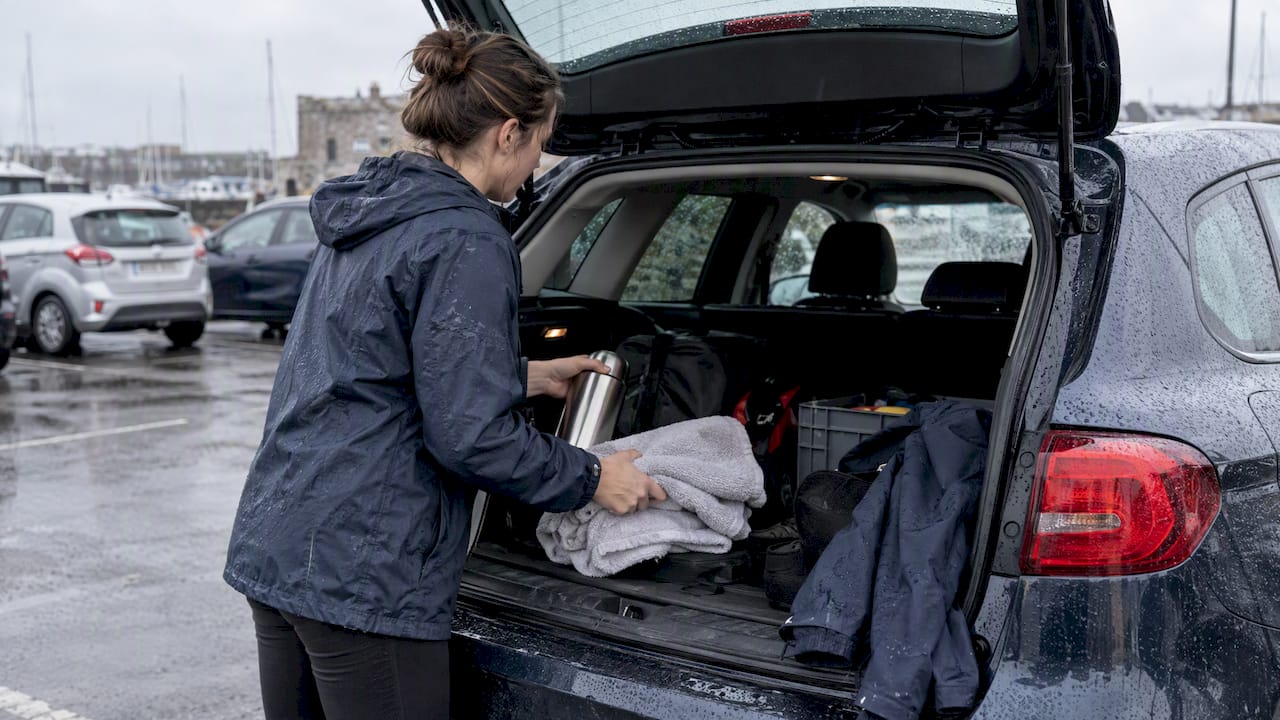
If friends, volunteers or colleagues are helping, they are outside longer than anyone. The same Triathlon Ireland guide recommends that helpers in heavy rain have waterproof clothing or shelter, a way to reach the organizer, and hot drinks and food. A flask and a few dry towels in the boot of a car are cheap insurance.
Check permits and noise rules if you move
Changing venue or format can change your obligations. The GAA guide notes that legislation and local authority licences often attach noise and environmental conditions, especially when events are moved or large groups gather in sensitive areas. If your event is large or licensed, speak to the local authority or your venue before switching plans. For a private group booking with an operator, ask the operator what applies.
What we do when it rains
We run large open-air pedal-powered bikes around Galway with music, a host and planned stops, and we know a wet forecast makes organizers nervous. Our approach is to treat the forecast as a live input rather than a verdict. We have written up how we check Met Éireann updates hour by hour so party bikes can keep running, and we are open with groups about when a safety call has to be made.
If you want a dependable group day in Galway, there are two things worth knowing:
- Our bikes are open-air by design. Guests should treat the ride like any outdoor Irish activity: waterproofs on, good shoes, and a bit of humor. Our open-air activities guide explains what to expect.
- We pair rides with indoor challenges. If you want a roof for part of the day, our collaboration packages combine the bike with an escape room or a Qube Challenge, so the group has a built-in change of pace.
Our perspective
After running group tours in Galway, our view is simple: groups rarely remember the rain, they remember whether the day felt organized. The groups that have the best wet-weather days did three things. They told everyone to dress for it, they agreed who made the call, and they kept the schedule loose enough to move things around.
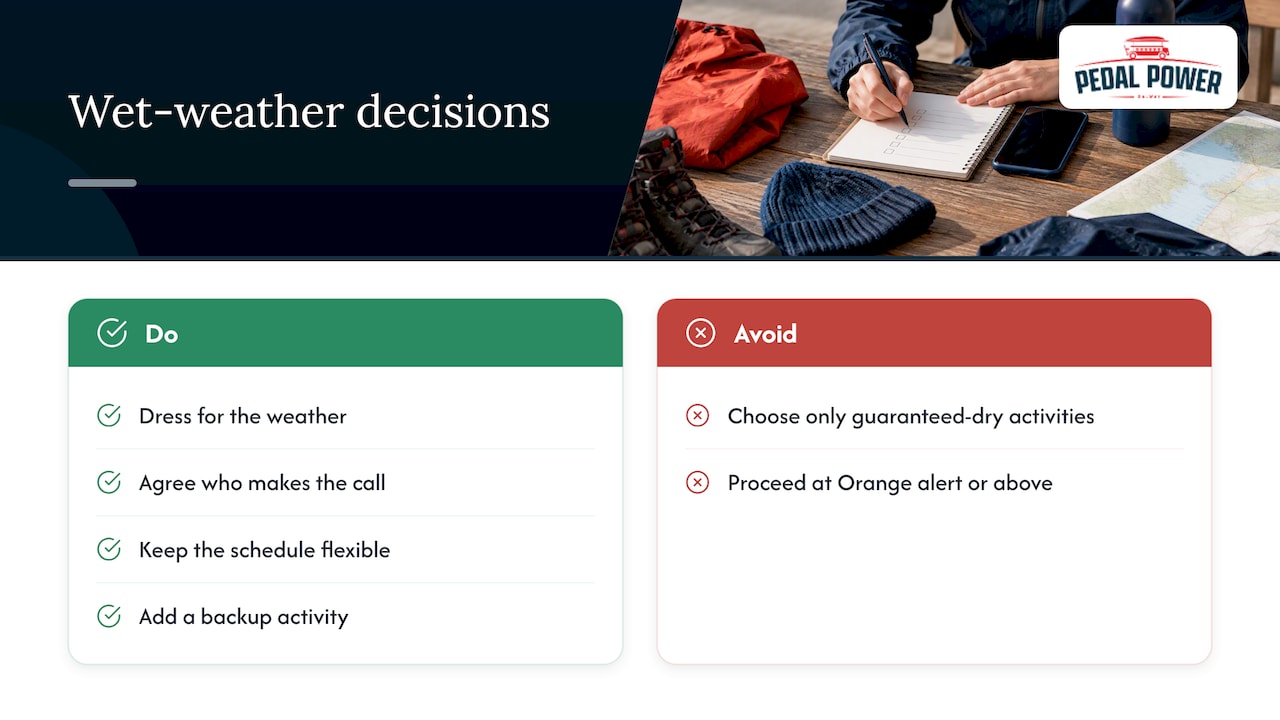
We would also say this to any organizer: do not choose an activity because it is guaranteed dry. Choose one that is fun with a good host, flexible with timing, and honest about its weather policy. Then add a backup. A big group with music and a plan will usually outlast a shower.
The flip side is just as important. If an alert is Orange or above, the right call is to move the date or switch to something indoors, however much the group wants to go. We would rather rebook you than put people at risk.
— Pedal
Plans for common group types
Hen and stag parties
These groups usually have travel and accommodation locked in, so moving the date is hard. Build the weather plan around format, not date: a later start, a swapped order, or an indoor challenge before the evening. Our stag party bike route is the €50 per person pub crawl, and our hen party themes guide helps if you want a costume or theme that works with a rain jacket over the top. Ponchos and good layers can become part of the theme.
Birthdays
For adult birthdays, a 6 to 44 guest range means you may be splitting between activities. Our adult birthday ideas cover options by group size. For teenagers, parents will want an early weather message and clear pick-up time. Our Teenager Birthday Tour is listed at €10.
Corporate and team days
Team organizers need certainty for the calendar and for sign-off. Write the weather decision into the event brief, name the decision-maker and set the cut-off time. Our guide to outdoor team building in Ireland covers what works, and the team social option for 36 to 44 people fits a single booking. If you need something shorter, see our two-hour activities guide.
Visiting groups
Tourist groups have the least flexibility and the least local knowledge. Give them one anchor activity and a simple Plan B, and keep the walk between them short. Our guide to group activities planners can book lists options, and our large group guide helps when numbers climb.
A one-page rain plan you can copy
Write these lines in a shared note and send it to your co-organizers:
- Event, date, headcount.
- Decision-maker and backup decision-maker, with phone numbers.
- Decision time: when you will confirm Plan A or Plan B (set it by your operator’s deadline).
- Triggers: what you do at no alert, Yellow, Orange and Red.
- Plan B: venue or format, confirmed capacity, opening hours, access notes.
- Transport: how the group gets from A to B, and home.
- Guest message: what to wear and when you will update them.
- Helper kit: waterproofs, hot drinks, a way to reach you.
- Money: what is refundable, what can be rebooked, who to call.
It takes about 15 minutes. It will save you far more than that on the day.
Book a Galway group day with a plan built in
If you are organizing a group in Galway and want a day that works in wet weather, start with our tours. The 1 3/4 Hour Pub Crawl Tour is €50 per person. The Pedal Power v’s Escape Room package is €60 per person, and the Qube Challenge V’s Pedal Power is €70 per person. Our 3 Hour Pub Crawl Tour is €70. Our bikes seat up to 44 people, and tours can be customized. Tell us your group size and your concerns about weather and we will help you plan around them. You can start at Pedal Power Galway.
FAQ
Should I cancel an event in Galway if rain is forecast?
Not usually. Rain alone is a comfort issue, and most groups can handle it with the right clothing and a flexible schedule. Cancel or move the event when Met Éireann issues a serious alert for your area, or when continuing would be unsafe. Agree those triggers with your operator before the day.
How far ahead should I plan for bad weather?
At least 10 days before the event, according to Triathlon Ireland’s guidance. By then you should have a named decision-maker, a confirmed backup and a plan for telling guests. Update the plan as the forecast firms up in the final days.
What should guests wear to an outdoor group event in Galway?
A waterproof jacket, shoes with good grip and a warm layer underneath. Eventbrite’s Irish guidance recommends telling guests in advance so they can pack suitable waterproof clothing and footwear. Send the message by email or in the group chat a week before.
What should I check before booking an indoor backup?
Check that it takes your full headcount, that it is open and taking bookings on your date, and that it has step-free access and toilets. Also plan how people get there and home. If any of those answers is uncertain, keep looking rather than relying on a maybe.
Sources
- Annual Climate Statement for 2023, Met Éireann
- Storm Preparation Guide, Galway City Council
- Event Safety Management Guide 2026, GAA
- Guide to Managing Adverse Weather at Events, Triathlon Ireland
- Galway in the rain: indoor options, The Press
- Hire, Galway Arts Centre
- Town Hall Theatre, Galway International Arts Festival
- Weather-Proofing Your Event, National Event Hire
- 8 Tips For Beating Bad Weather At Outdoor Events, Eventbrite