

The math is simple: 4 to 6 stops, clustered inside a walkable radius, with 30 to 45 minutes at each one. That’s the ceiling for most groups before feet hurt and momentum dies. For 8 to 12 people, walk it. For 15 or more, book a party bike or charter so nobody gets lost between venues three and four.
Do these three things today:
- Pick a starting neighborhood with easy access and forgiving crowds
- Lock your headcount so you know whether you’re walking or riding
- Call your first and last venues now. They book up faster than the middle stops.
Pro Tip: Text your final headcount to every venue 24 hours ahead. A number that shifts by more than two or three people can bump you out of a reserved area.
Key Takeaways
A pub crawl built around 4 to 6 clustered stops, real walking times, and a confirmed headcount is the single biggest factor separating a smooth night from a chaotic one.
| Point | Details |
|---|---|
| Stop count and timing | Plan 4 to 6 stops at 30 to 45 minutes each, with a buffer for tabs and stragglers. |
| Transport by group size | Walk for 8 to 12 people; book a party bike or charter for groups of 15 or more. |
| Venue contact timing | Call venues several days ahead for groups over 10, and a full week out for weekend bookings. |
| Route sequencing | Start easy, build to a livelier middle stop, and finish near transport or food. |
| Managed alternative | Pedal Power Galway’s guided pub crawl tour handles the route and coordination for groups who want a turnkey night out. |
Table of Contents
- Pub Crawl Planning Checklist To Copy Right Now
- How Do You Plan a Pub Crawl Route That Doesn’t Wear People Out?
- What Should You Look For When Picking Venues For A Crawl?
- How Do You Keep A Group Pub Crawl Running Smoothly?
- Which Tools Actually Help You Plan And Run A Crawl?
- What Does A Managed Pub Crawl Tour Actually Include?
- Sources
Pub Crawl Planning Checklist To Copy Right Now
Good pub crawl planning starts with paperwork, not pubs. Nail these five things before you touch a map:
- Set the date and confirm your core group. You need a real headcount, not a guess, before anything else makes sense.
- Set a per-head budget. Drinks, cover charges, and food add up fast; decide the number before the night, not during it.
- Choose your transport. Walking works for smaller crews; a booked ride keeps 15 or more people together.
- Shortlist 4 to 6 pubs in one cluster. Note opening times and any early-bird happy hours.
- Put down a small deposit if you’re booking transport or a reserved area. It’s the only thing that guarantees your spot.
Pro Tip: Start your shortlist two weeks out. Popular venues get booked by other groups doing the exact same thing you are.
How Do You Plan a Pub Crawl Route That Doesn’t Wear People Out?
Four to six stops at 30 to 45 minutes each is the number that shows up again and again in bar crawl planning guides, and it’s not arbitrary. Fewer stops and the night feels rushed. More than six and half your group peels off before the last round.
The order matters as much as the count. Start at a forgiving, easy-access venue that can absorb stragglers arriving late. Save the busier, louder pub for the middle of the night, not the first stop and not the last. Finish somewhere close to transport or late-night food, because nobody wants to hike ten minutes at midnight when they just want a taxi.
Walking legs should run 10 to 15 minutes, tops. Anything longer and you’re not bar hopping, you’re on a forced march. Build in slack, too. A round of drinks and a closing tab always takes longer than the group thinks it will.
| Element | Recommended Approach |
|---|---|
| Stop count | 4 to 6 venues |
| Time per stop | 30 to 45 minutes |
| Walking legs | 10 to 15 minutes between stops |
| Buffer per stop | 5 to 10 minutes for tabs and stragglers |
| Backup plan | One alternate venue, one late food stop |
A compact, walkable cluster beats an ambitious route that jumps across three neighborhoods every time. Every bridge you cross or long block you walk is a chance for someone to get separated from the group. Keep the whole night inside one tight loop, and always have a second venue in mind if your first choice is packed when you arrive.
- Anchor the route to one dense pub cluster, not a scattered wish list
- Sequence venues from calm to lively to calm again
- Build a 5 to 10 minute cushion into every stop for closing tabs
- Name a backup venue and a late-night food stop before you leave the house
What Should You Look For When Picking Venues For A Crawl?
Not every pub handles a group of 12 well, even if the beer is great. Before you commit a stop to your itinerary, check for these things:
- Floor space that can actually absorb your group without blocking the bar
- How the venue handles queuing during peak hours
- Whether food is available, even just bar snacks, for people who skipped dinner
- Card payment acceptance, since not everyone carries cash
- Outdoor seating or a smoking area if your group will use one
- Step-free access if anyone in your group needs it
When you call ahead, ask directly: what’s your capacity for a group our size, do you take private bookings, when are your peak hours, do you offer a group menu, and is a deposit required to hold space? Many pubs run private events that never make it onto their website, so a phone call surfaces options a Google search won’t.
Pro Tip: Call at least several days ahead for groups over 10, and give it a full week if you’re planning around a Friday or Saturday night. Venues fill their reservable slots fast on weekends.
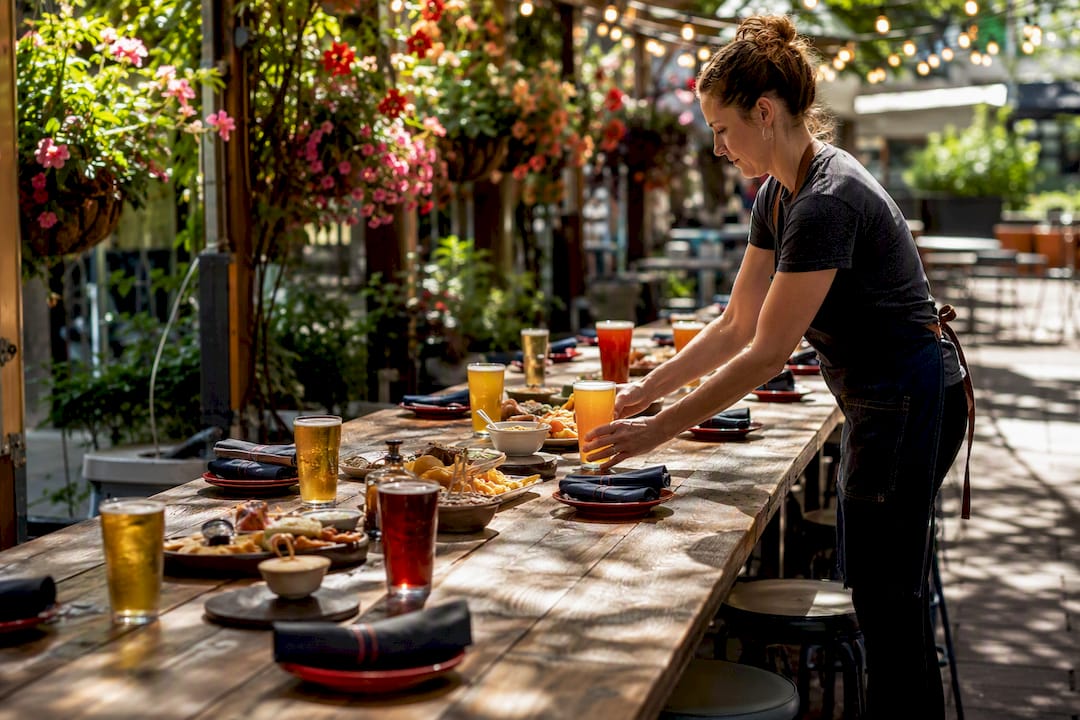
Ask about a dedicated corner or a small group discount, but don’t push for exclusivity on a night you haven’t booked. Most venues will hold a table, not clear the whole room, unless you’re paying for a private hire.
How Do You Keep A Group Pub Crawl Running Smoothly?
Planning the route gets you halfway there. What happens on the night depends on a few simple roles and habits:
- Assign a timekeeper. One person calls “let’s move” at each stop so the group doesn’t drift into an hour-long tab war.
- Name a payments lead. Splitting into smaller pods for rounds moves faster than one person collecting cash from 15 people at the bar.
- Pick a sober or lighter-drinking contact. Someone needs a clear head to handle a lost phone, a missed venue, or a headcount that doesn’t add up.
- Share the route. A QR code or shared map link means latecomers can find the group without a string of confused texts.
- Count heads before leaving every venue. It takes 30 seconds and it’s the single easiest way to avoid leaving someone behind.
Pro Tip: Build in a food window around stop three. A slice of pizza at the halfway mark keeps the whole group steadier for the rest of the night.
Line up your ride home before the first pint, not after the last one. Know your nearest late-night transport hub or have a taxi number saved, because arranging that at 1 AM with a tired, scattered group is exactly when things go wrong.
Which Tools Actually Help You Plan And Run A Crawl?
You don’t need five apps. You need one from each of these categories, and you’re set:
- Route generators that use opening hours, walking distance, and venue ratings to spit out a timed itinerary automatically
- Shared-map or check-in apps that give latecomers a join code so they can find the group without a group text spiraling out of control
- An RSVP or event page to lock your headcount before you book anything
- A group-payment tool to split tabs without one person fronting the whole bill
Auto-generated routes save time when you don’t know the neighborhood well or you’re planning last-minute. Hand-picked stops win when you have a favorite pub you’re building the night around. Most planning apps cap free versions at a small group size, with host-only premium tiers unlocking bigger crawls, so check the limit before you commit to one for a 20-person night out.
What Does A Managed Pub Crawl Tour Actually Include?
Not every group wants to build a spreadsheet and make five phone calls. That’s where a guided option earns its keep, and it’s worth knowing what one actually looks like before you rule it out.
Pedal Power Galway runs a guided pub crawl tour on a large open-air party bike, with music built in and a guide handling the route, the pacing, and the group coordination so nobody’s checking a map mid pint. A typical outing runs roughly one hour and forty five minutes, moving between a small cluster of stops without anyone needing to organize a single phone call.
What’s covered on a managed tour:
- A guided, pre-planned route between venues
- Music and a social, party-bike format built for groups
- A guide managing timing and group cohesion
- Simple booking with tailoring available for hen parties, stag parties, birthdays, or corporate groups
A managed pub crawl format like this suits larger groups (15 and up) especially well, where a party bike or charter keeps everyone together in a way that walking a big crowd between venues rarely manages on its own.
DIY works well for smaller, flexible groups who know the area. A managed tour makes more sense once headcount climbs, or when the group wants something more memorable than a standard walk between pubs.
What Three Things Actually Protect A Pub Crawl’s Rhythm?
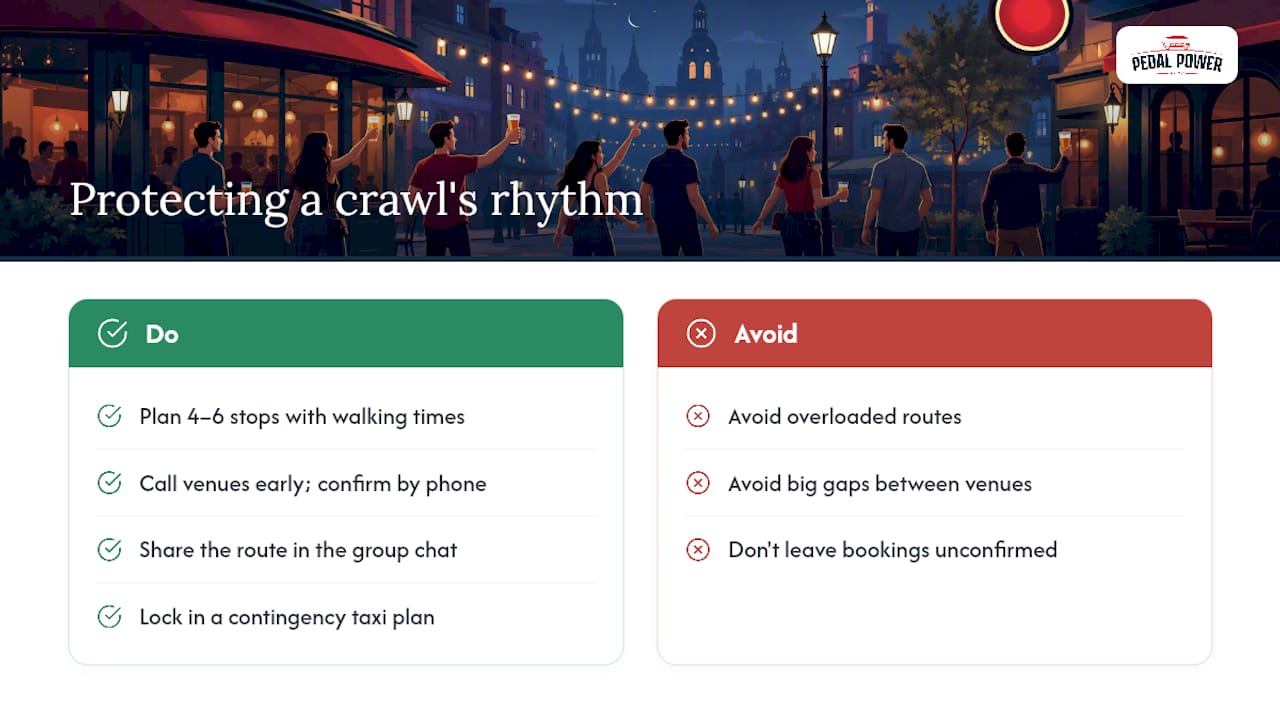
Pacing beats ambition every time. A tight 4 to 6 stop cluster with real walking times keeps the group together, while an overloaded route with big gaps between venues is what quietly kills a night out. Call your venues early. Keep the route compact. Have a taxi plan ready before anyone needs it.
Last-minute checklist: confirm every booking by phone, share the route with the group chat, and lock in a contingency ride home.
— Pedal
Skip The Planning And Book The Ride Instead
If you’ve read this far and the spreadsheet still feels like a chore, there’s a shorter path. Pedal Power Galway builds the route, handles the venue coordination, and keeps the whole group together on one big open-air bike with music running the entire time, so you skip the five phone calls and the headcount anxiety entirely.
The 1¾ hour pub crawl tour fits hen parties, stag parties, birthdays, and corporate groups looking for something a standard bar hop doesn’t deliver. Tours can be tailored to your group’s size and occasion, and booking takes a few minutes online rather than a week of phone tag with venues. Pricing and deposit details are laid out on the tours page, where you can check dates and group sizes before you commit. If your night out has more than a dozen people and a date that’s already set, that’s the moment to stop planning and start booking.
Sources
- How to Plan a Bar Crawl in 2026: Timeline, Transport, and Tips | Gather Shot
- How to Plan Pub Crawl Routes That Work – Pub Reviews UK News & Guides
- Bar Crawl Ideas: What Is a Bar Crawl and How to Set One Up – Thrillist
- PubCrawl app — plan and share pub crawls
- Golden Mile: Pub Crawl Generator & Route Planner — Free