

Party bikes can be safe when the operator enforces a sober, trained driver, routine vehicle checks, clear rider rules, and appropriate insurance. Safety outcomes depend far more on those operational controls than on the vehicle itself, and local rules on alcohol, permits, and driver licensing vary widely. Before booking, check the operator’s insurance, waiver, and age policies, and review the checklist and insurance sections below.
TL;DR:
- Safety primarily depends on operational controls like a sober, trained driver and routine vehicle inspections rather than the vehicle itself.
- Local laws and permits vary widely, especially concerning alcohol consumption, driver licensing, and route restrictions, so check regulations before booking.
- Reputable operators enforce strict staffing roles, route planning, and insurance coverage, with transparency in published safety policies.
- Riders should follow safety habits such as staying seated, securing loose items, and adhering to alcohol policies to prevent incidents.
- Insurance, liability waivers, and safety plans are more reliable safeguards than waivers alone, making pre-ride verification essential.
Table of Contents
- What a party bike (pedal pub) actually is
- How local laws and permits shape where party bikes can operate
- What a responsible operator does to manage risk
- What every rider should do to stay safe
- Where accidents actually happen and how to prevent them
- Insurance, liability, and waivers explained plainly
- How alcohol policy keeps group rides under control
- A practical checklist for organizers and riders
- How an operator like Pedal Power Galway shows its safety approach
- Balancing fun with duty of care
- Book a safer group ride with Pedal Power Galway
- FAQ
- Sources
What a party bike (pedal pub) actually is
A party bike, sometimes called a pedal pub, is a multi-passenger pedal-powered vehicle built for group sightseeing and social outings. Most designs typically carry about ten to sixteen pedaling passengers, though some larger builds can accommodate many more people including non-pedaling riders and staff according to Wikipedia’s party bike entry. The passengers sit in a circle or along benches and pedal in sync, while a dedicated, non-pedaling driver steers, brakes, and manages speed from a separate position at the front or rear.
This driver and passenger split matters for safety. Pedalers contribute motion but have no control over steering or braking, so the entire safety case for the vehicle rests on the driver’s sobriety, training, and judgment. Most bikes add a sound system, onboard lighting, and sometimes a small bar area or cooler mount, which is part of the appeal but also part of the risk: music and a festive mood can distract riders from paying attention to boarding steps, traffic, or road surface changes.
Typical uses include group sightseeing, pub crawls, party outings, and corporate events.
Each of these contexts changes the risk profile. A daytime sightseeing tour with sober riders behaves very differently from an evening pub crawl where alcohol consumption increases over the course of the ride. Organizers booking for a group should think about which category their event falls into and ask the operator how its safety rules adjust for alcohol-heavy outings versus family-friendly or corporate bookings.
How local laws and permits shape where party bikes can operate
Party bike regulation is not standardized. What is legal and common in one city can be restricted, permitted only under specific conditions, or banned outright in another. Amsterdam banned beer bikes from its city center at the end of 2017 after sustained complaints about noise and congestion, according to Wikipedia. That example shows local rules can swing toward prohibition rather than simple permission, and a reader should never assume their city treats party bikes the same way another one does.
Municipal codes in some places go further and include explicit language prohibiting the operation of party bikes on public roads or property unless the operator holds a specific permit. These prohibitions are usually tied to concerns about traffic flow, noise in residential or historic districts, or open-container rules around alcohol. A rule that bans unpermitted operation in one city says nothing about whether the next city over allows it freely, so this is a check-before-you-book issue rather than a general safety fact.
Alcohol handling is one of the biggest sources of local variation. Some jurisdictions allow riders to bring or consume alcohol onboard throughout the tour. Others only allow alcohol consumption at licensed stops, such as pubs along the route, and prohibit open containers on the bike itself. Driver licensing requirements also differ: some places require a commercial or specialty license to operate a multi-passenger pedal vehicle on public roads, while others treat it more like a standard bicycle under local traffic law. Lexology’s analysis of pedal pub risk notes that there is no single worldwide rule governing these vehicles, and that regulations are highly localized.
Before booking or organizing a party bike event, check:
- Your local council or city transport authority’s rules on multi-passenger pedal vehicles
- Whether the relevant road traffic act requires a specific license class for the driver
- Whether the route requires an event or street-use permit for group activities
- The operator’s own published policies on alcohol, boarding, and age limits
None of this means party bikes are inherently risky where they are legal. It means the safety and legal picture is local, and a few minutes of checking before you book removes most of the uncertainty.
What a responsible operator does to manage risk
A credible operator’s safety program rests on a handful of concrete controls, not vague promises. Organizers booking a group outing should expect to see, or be able to ask about, each of the following:
- A sober, professionally trained driver who never pedals and maintains full control of steering, braking, and speed throughout the ride.
- A pre-ride vehicle inspection covering brakes, tires, steering linkage, lighting, and seating hardware, with maintenance logged and available on request.
- Clear capacity limits that match the bike’s design, so the vehicle is never overloaded beyond its rated passenger count.
- A planned route that avoids known hazards such as steep grades, heavy traffic corridors, or roads with poor surface conditions.
- Defined staff roles, often a driver plus a marshal or host who manages boarding, alcohol policy, and group behavior.
- An emergency procedure that covers what staff do in a collision, a medical issue, or a rider falling ill from alcohol.
The sober, trained driver is the single most important control on this list. Lexology’s review of pedal pub safety repeatedly points to driver sobriety and training as the most significant factor separating well-run operations from risky ones, since every other safeguard depends on the person steering staying alert and in control.
Route planning deserves more attention than most organizers give it. A good operator does not simply pick the shortest path between stops. They choose roads with manageable traffic speeds, avoid known pothole stretches, and plan turns and junctions where a marshal or the driver can slow down and check for cross traffic before committing. Speed itself is rarely the danger on a party bike, since these vehicles move at a walking-to-jogging pace, but sudden stops, sharp turns, and uneven surfaces can unseat a distracted rider.
Insurance is the piece organizers most often forget to ask about, yet it matters as much as the vehicle inspection. Expect a responsible operator to carry public liability insurance that covers third-party injury or property damage, and ideally some form of event or operational cover that extends to group outings rather than solo cycling. Bikmo’s Irish cycle insurance policy wording illustrates a useful distinction: standard cycle insurance policies are not the same as motor vehicle liability cover under road traffic law, and they often carry event exclusions, security requirements, and specific claims procedures that a casual rider would not expect. A party bike operator needs cover suited to a multi-passenger commercial vehicle, not a personal cycling policy.
Liability waivers are common and useful, but they have limits. A waiver can set expectations and reduce frivolous disputes, but it generally does not erase an operator’s responsibility if negligence caused the injury, a point Lexology’s legal overview makes directly. Before paying a deposit, ask the operator for proof of public liability insurance and a brief written outline of their safety procedures. A business with nothing to hide will usually produce both without friction.
Pro Tip: Ask the operator directly who their driver is and how long they have worked for the company; a vague answer is a bigger red flag than an old-looking bike.
What every rider should do to stay safe
Operators control the vehicle and the route, but riders control their own bodies, and a surprising share of party bike incidents come down to passenger behavior rather than mechanical failure. A few habits make the biggest difference.
- Stay seated while the bike is moving, and avoid leaning out, standing, or shifting your weight suddenly.
- Secure loose items like phones, bags, and drinks so nothing rolls underfoot or becomes a tripping hazard.
- Wear closed, non-slip shoes rather than flip-flops or heels, since pedaling and quick footwork onboarding steps both demand stable footing.
- Bring a light jacket if the tour runs into the evening, since open-air bikes offer no weather protection.
- Follow the driver’s and marshal’s instructions immediately, especially around boarding, exiting, and any sudden stop.
Alcohol policy deserves particular attention because it intersects with both safety and legal liability. Most responsible operators limit how much alcohol can be consumed onboard, or restrict drinking to licensed stops along the route rather than allowing open containers throughout the ride. This is not just about keeping things orderly. Lexology’s legal analysis explains that a rider’s own intoxication can factor into contributory negligence if an incident leads to a legal claim, meaning a visibly drunk passenger who ignores safety instructions may recover less in damages even if the operator shares some fault. Staying within the operator’s alcohol policy protects your safety and your legal position at the same time.
Helmet rules are one of the more inconsistent parts of party bike safety, and there is no universal standard requiring helmets on these vehicles. Some operators provide or require them, especially for higher-speed routes or roads shared with heavier traffic, while others treat the slow, seated nature of the ride as lower risk and leave helmets optional. The sensible approach is to follow whatever the specific operator recommends or requires, and to wear a helmet without complaint if one is offered, since it costs you nothing and only adds protection.
Pro Tip: Check the operator’s dress code and footwear guidance before you book. A quick look at a page like a party bike dress code guide shows the kind of practical detail, shoes, layers, and what to avoid, that responsible operators spell out in advance.
Where accidents actually happen and how to prevent them
Most party bike incidents cluster around a small number of predictable moments rather than random mechanical failure. Understanding the pattern makes prevention straightforward.
Boarding and exiting account for a large share of minor injuries. Riders climbing onto an elevated bench or stepping down while distracted, carrying a drink, or wearing unsuitable shoes are more likely to slip or misjudge the step height. Lexology’s review of pedal pub incidents identifies boarding and exiting falls as one of the most common causes of injury on these vehicles, alongside collisions with other road users and jolts from uneven surfaces such as potholes.
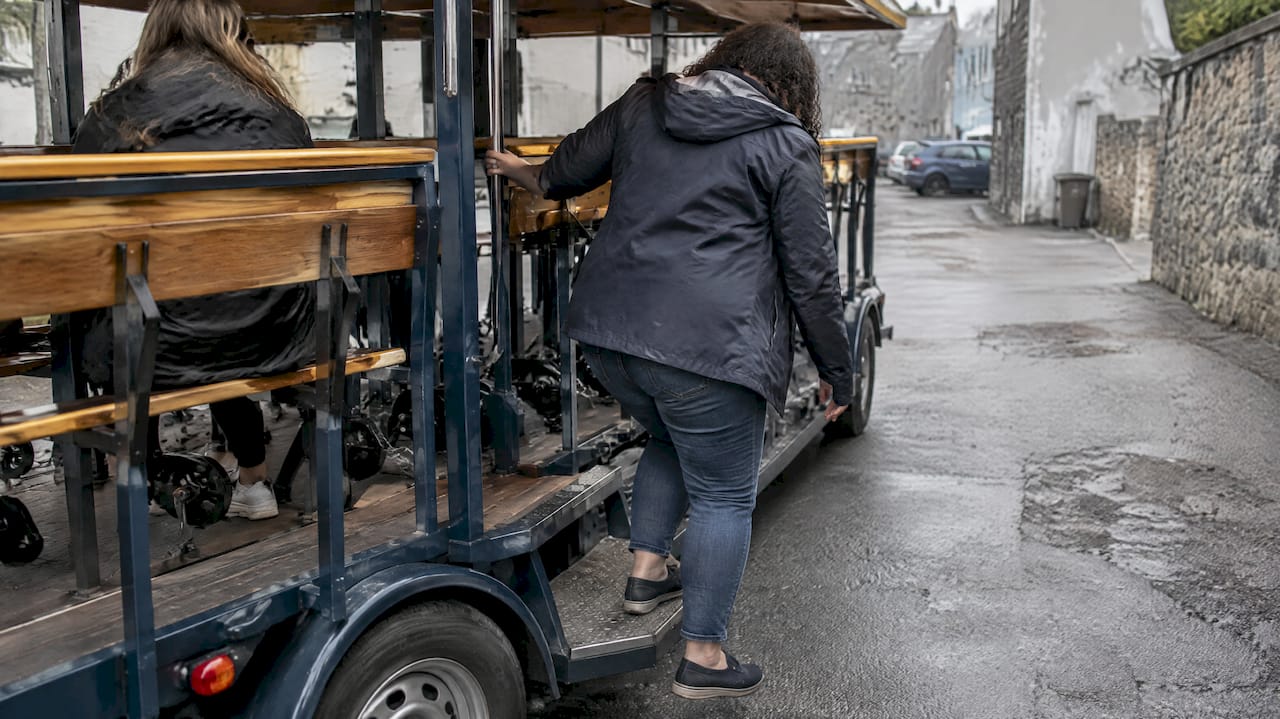
Tipping is rare given the wide, low wheelbase most party bikes use, but it becomes more plausible when passengers lean collectively to one side, such as reaching for a photo or waving at pedestrians. Collisions with cars, cyclists, or pedestrians usually trace back to visibility issues at junctions or a driver misjudging a gap in traffic, which is why route planning around busy intersections matters so much.
Practical mitigations fall into two categories: procedural and design-based.
- Controlled boarding, where a marshal directs riders one at a time and holds the group back until the bike is fully stopped.
- Route inspection ahead of the season to flag potholes, construction, or newly added traffic signals.
- Reduced speed on any stretch with a rough or uneven surface, regardless of how much time it costs.
- A spotter or marshal positioned at busy junctions to confirm it is clear before the driver commits to crossing.
On the design side, secure seating with proper hand holds, a stable and wide wheelbase, and consistent maintenance of brakes and steering components all reduce the chance that a minor misstep turns into a real injury. None of these fixes are expensive or complicated, which is part of why their absence is such a clear warning sign when evaluating an operator.
Insurance, liability, and waivers explained plainly
Three types of cover are relevant to party bike operations, and organizers booking a group event should understand what each one actually does. Public liability insurance covers third-party injury or property damage, the kind of claim that follows a collision or a fall that injures a bystander or another road user. Professional indemnity cover addresses operational errors, such as a mistake in route planning or staff conduct that leads to harm. Event cover, where operators carry it, extends protection to larger group bookings or themed events that go beyond a standard solo ride.
Lexology’s legal overview of pedal pub operations notes that a strong operator safety strategy pairs signed waivers with this kind of insurance, because standard recreational cycling policies often exclude massed-start or multi-passenger commercial events, which means operators frequently need specialist brokers who understand the specific risks involved. Irish cycle insurance policy wording from Bikmo makes a similar point from the consumer side: standard cycle cover is not the same as motor vehicle liability insurance under road traffic law, and it typically carries its own security requirements and event exclusions.
Waivers play a real but limited role. Biking shows the kind of terms operators commonly ask participants to agree to before a ride, covering acknowledgment of risk and release from certain claims. A signed waiver can reduce disputes and sets clear expectations, but it generally does not protect an operator from a claim rooted in genuine negligence, such as sending out a bike with known brake problems.
Lexology’s legal review of pedal pub risk finds that waivers are frequently used by operators but are not always determinative in court, which makes public liability and event insurance a more reliable safety net than paperwork alone.
Before booking, ask for or check:
- A certificate of insurance showing current public liability cover
- A written safety plan or summary of onboarding and emergency procedures
- Emergency contact details for the driver or company during the ride
- The operator’s written alcohol and age policy, so there are no surprises on the day
How alcohol policy keeps group rides under control
Alcohol is central to many party bike bookings, which makes a clear policy one of the most important safety documents an operator can hand over. The driver sobriety requirement is the anchor of the whole system: a driver never drinks before or during the ride, full stop, since the entire group’s safety depends on that person staying alert.
Most operators manage passenger alcohol in one of two ways. Some restrict alcohol entirely to licensed stops along the route, such as pubs the tour visits, rather than allowing open containers on the bike itself. Others permit a limited amount onboard but reserve the right to cut off service if a rider becomes visibly impaired. Either approach works when it is communicated clearly and enforced consistently.
- Staff retain the authority to refuse further alcohol service to any rider who appears intoxicated.
- Staff can remove a disruptive or unsafe rider from the tour if their behavior puts the group at risk.
- Operators escalate to emergency services immediately if a rider’s condition raises medical concerns.
- The alcohol policy is communicated before booking, not sprung on the group mid-ride.
A written policy that organizers can read before they pay a deposit does more to prevent problems than any amount of in-the-moment enforcement, since it sets expectations for the whole group ahead of time. Organizers booking for occasions like hen or stag parties, where alcohol consumption tends to be heavier, should read this policy carefully and relay it to the group beforehand.
A practical checklist for organizers and riders
Safety on a party bike outing comes down to a short list of checks performed before the ride starts and a few habits maintained once it is underway.
- Confirm the operator’s public liability insurance and ask for proof if it is not published online.
- Verify the vehicle has passed a recent inspection and that maintenance records exist.
- Confirm staff roles: who drives, who manages boarding, and who handles the alcohol policy.
- Review the planned route and ask how the operator handles busy junctions or known hazards.
- Read the waiver in full before signing, and ask about age limits or fitness requirements if the group includes minors or older participants.
- Pack secure, non-slip footwear and confirm how the group should handle bags, phones, and drinks during the ride.
| Who | Pre-ride action | On-ride habit |
|---|---|---|
| Organizer | Check insurance and vehicle maintenance records | Confirm staff roles before departure |
| Rider | Read the waiver and confirm footwear rules | Stay seated and follow marshal signals |
| Both | Review the emergency contact plan | Report hazards or discomfort immediately |
A simple pre-event checklist borrowed from other guided group activities helps here too. Lisbon by Boat’s safety checklist for passenger briefings and Flight of Aloha’s group visit planning guide both cover the same underlying idea: a short, specific checklist reviewed before departure catches far more problems than a general sense that “the operator probably has it handled.”
Once the ride is moving, the rider’s job is simple: stay seated, follow marshal signals, speak up if something feels unsafe, and know where the nearest exit point is at each stop. None of this requires special training, just attention.
How an operator like Pedal Power Galway shows its safety approach
Reviewing an operator’s published pages is one of the fastest ways to judge how seriously they take safety, since the details they choose to publish in advance say a lot about how they run the actual tour. On our own site, a few pages are worth pointing to as examples of the kind of transparency worth looking for from any operator.
- Our party bike age limit guide sets out age restrictions, including rules that differ between daytime and evening bookings, so organizers know in advance whether a mixed-age group fits a given tour slot.
- Our dress code guide lays out footwear and clothing recommendations that reduce the boarding and exiting risks covered earlier in this guide.
- Our meeting point page explains exactly where and how groups board, which removes the confusion that often leads to rushed, unsafe boarding.
- Our tours overview lists the specific experiences we run, so organizers can match the right tour format to their group’s age range and alcohol preferences.
When you read these kinds of pages from any operator, look for the same specifics: concrete age rules rather than vague age ranges, clear instructions on footwear and boarding rather than general safety slogans, and a meeting point description detailed enough that you could find it without calling ahead. That level of published detail is a reasonable proxy for how carefully an operator has thought through the rest of their safety procedures.
Balancing fun with duty of care
The loudest arguments about party bikes tend to split into two extremes: ban them outright because alcohol and group outings are risky, or wave off every concern because riders are the ones who chose to be there. Neither position holds up well. The real safety picture depends on specific, checkable controls, a sober driver, maintained equipment, a clear alcohol policy, adequate insurance, and most incidents trace back to the absence of one of those, not to the existence of the vehicle itself.
Local authorities, operators, and riders each hold a piece of this. Authorities should regulate based on real risk patterns like boarding injuries and junction collisions rather than blanket bans driven mainly by noise complaints. Operators should publish their safety procedures and insurance details without being asked twice. Riders should treat asking about insurance and emergency plans as a normal part of booking, the same way you would ask about cancellation policy.
Fun and duty of care are not opposites here. The operators that take safety seriously tend to run the better experience too, because a driver who knows the route, a well-maintained bike, and a clear alcohol policy make for a smoother ride regardless of how loud the music gets.
— Pedal
Book a safer group ride with Pedal Power Galway
A good party bike outing starts with the same questions this guide has walked through: who drives, what’s the alcohol policy, and what happens if something goes wrong. We built our tours around answering those questions before you ask them, with a dedicated, non-pedaling driver, published age and dress-code guidance, and a clear meeting point so your group knows exactly where to go.
Our 1 3/4 Hour Pub Crawl Tour is a popular starting point for groups wanting a guided pub crawl experience on a large open-air bike. For current pricing, please visit our website. Before you book:
- Check our age limit page if your group includes minors or spans a wide age range.
- Review our dress code guide so everyone arrives in suitable footwear.
- Contact us directly if you need proof of insurance or have accessibility requirements, and we will walk you through what we have in place.
Reach out through our contact and booking page with any questions about group size, timing, or special access needs before you commit.
FAQ
What is a party bike?
A party bike, also called a pedal pub, is a multi-passenger, pedal-powered vehicle where a group of riders pedal together while a separate, non-pedaling driver steers and controls speed. Capacities commonly range from about 10 to 16 pedaling passengers, with some larger designs seating up to 44 people including staff and non-pedaling riders, according to Wikipedia.
What is the 2 2 2 rule for bike helmets?
There is no established “2 2 2 rule” for bike helmets referenced in party bike safety guidance or standard cycling safety sources. Helmet requirements for party bikes vary by operator and location, so the safest approach is to follow whatever policy the specific operator publishes and wear a helmet when one is offered or required.
What is the 75% rule in cycling?
Rather than relying on an unverified rule, focus on documented controls that matter for party bike safety: a sober driver, vehicle maintenance, seating security, and a clear alcohol policy.
What is the 80/20 rule in biking?
If you have come across this term, it likely refers to a general productivity or training concept unrelated to party bike safety rather than a formal cycling guideline.
What should I check before booking a party bike tour?
Ask the operator for proof of public liability insurance, a summary of their safety procedures, and their written alcohol and age policies before you pay a deposit. Lexology’s legal review notes that waivers alone are not a substitute for proper insurance, so confirming cover matters more than a signature on a form.
Sources
- Party bike — Wikipedia
- The New Pub Crawl: Pedal Pubs and What You Need To Know — Lexology
- Policy wording – Bikmo Ireland Cycle Insurance
- Biking